How we can find opportunities in user experience and pain points that we can improve?
Introducing User Experience Analysis

Reshaping the Modern Marketing Funnel
Marketers often refer to the marketing funnel when talking about how to convert leads and prospects into buyers. Traditionally this funnel starts with a wide brim full of people who are interested in the product. As the cone narrows, so do the amount of people who are likely to buy.

Ultimately, the bottom of the cone represents the customers who buy. It’s at this point where most marketing funnels stop. The customer finalized the transaction, and for all intents and purposes, the customer’s journey with the brand is done.
This type of funnel does not work with the more detailed path-to-purchase of today’s modern consumer. Marketers today are starting to look beyond the initial transaction and pay closer attention to how to retain consumers, avoiding costly churn and simultaneously building a base of brand ambassadors.
To showcase both conversion rates and customer retention rates we’ve taken a different spin on visualizing the marketing funnel. Here’s what it looks like today.
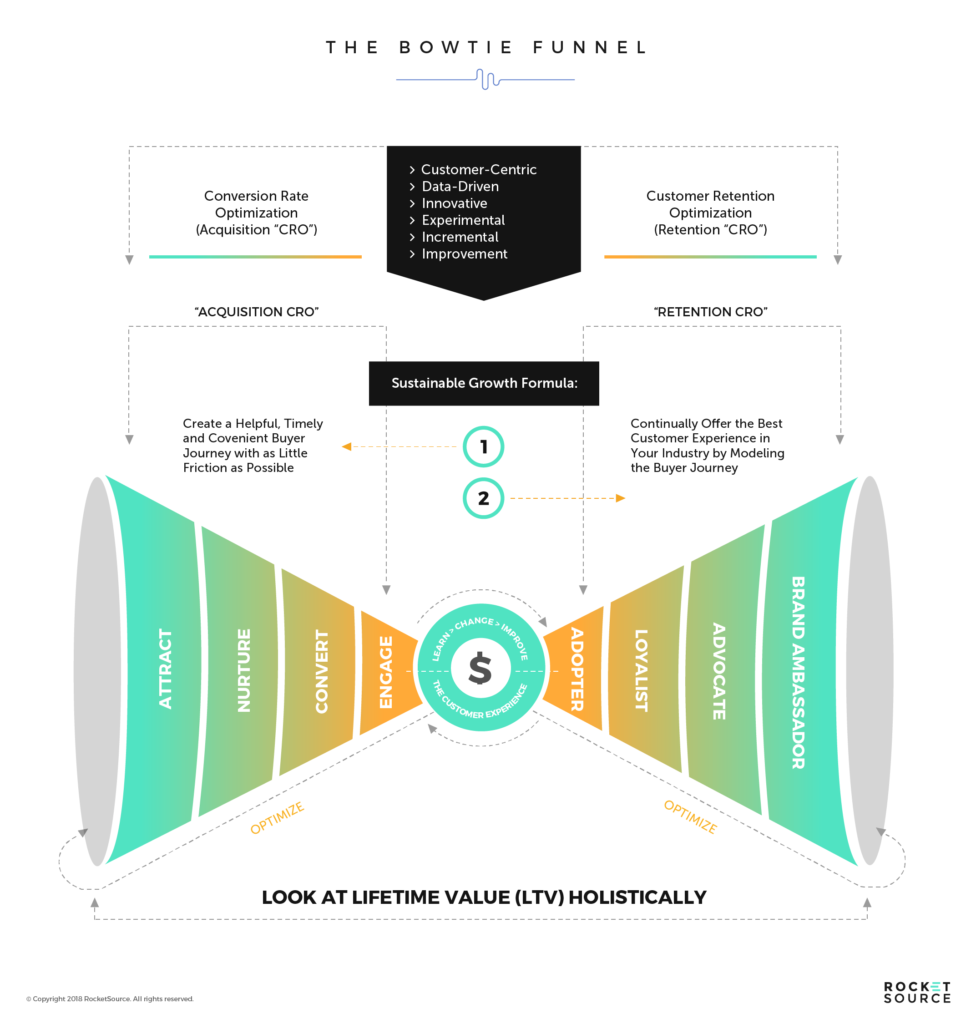
This is called the Bow Tie Funnel because of its shape. The left side gets a little more detailed than traditional marketing funnels, looking closer at the various stages of the buyer’s journey — attracting leads, nurturing potential buyers along their journey, converting prospects into customers, and then engaging buyers with brief follow up emails or direct mail thanking them for the purchase. Traditionally that’s when the customer’s journey ends in the eyes of a business, but reality shows that’s not the case.
On the right side of this modern marketing funnel, you’re able to see what the customer believes happens after the purchase and the potential for a deeper relationship. By optimizing their experience after the purchase, businesses increase retention rates and move customers from an adopter of the brand to a brand ambassador.
Understanding this full end-to-end journey, and how it loops back to the beginning to continually engage buyers, is critical when it comes to modern customer journey visualization. Equally critical is the lens in which you design these visual aids and communicate the journey across your organization.

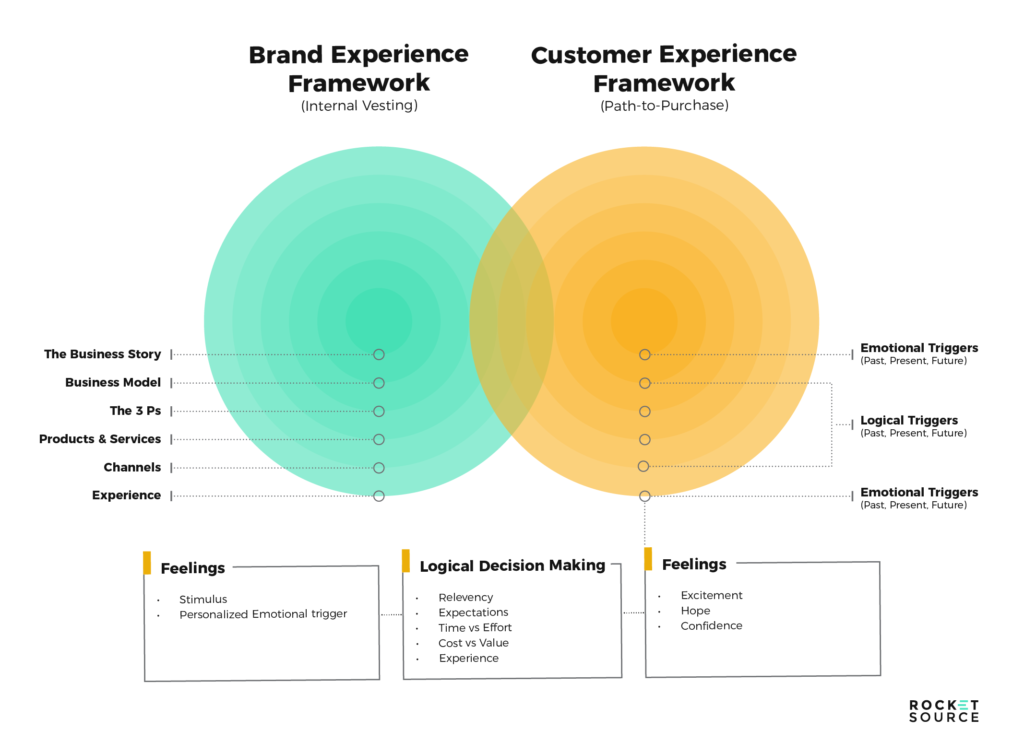
The Importance of Having a Framework for Customer Journey Visualization


No comments:
Post a Comment