Week 6 Pitch: Feedback from Lyn and Mark


Written from a voice recording: 

“Piggybacking on Harold is a good idea of an existing model that the schools and kids understand to some extent. Directionally that feels like a really useful partnership to develop and also the back of the presentation you're talking about other partners and you have done investigation about funding sources, that looks really good. What this hangs on is how this thing ‘the plastics workshop’ works, so what you’re talking about is this as a service but it’s also the event and in terms of making this work in the longer term you will want to get inside what’s happening inside the container and give people a really good understanding of that because it depends on a whole pile of things. Around sources of materials, HDPE great, you’re talking about not contaminating that with anything else because you are producing something which will then stay in the school environment, you want to manage that as much as possible, you’ve acknowledged that which is great. I think the idea of getting your workshops to turn out the kind of lego style bricks you could work on. Do you know how many milk bottles it takes to make a brick? that's just one of the things to look for, I don't think you'll have any trouble getting the material to recycle i think the issue is for these block to be useful you want probably four/five times as much as you've got in those images. It just means that there's a lot of bricks and lot of plastic and cycling time. Just something you've got to build into your workshop model. So I think that's looking really interesting one of the things that seems to be happening, that creates confusion in recycling is that the rules change from area to area depending on what recycling resources are available and also change over time and that was one of the things when you started off this, one thing that I was aware of. They can recycle soft plastics in Auckland but in Wellington we can't for example. So even if you put soft plastics in your recycling, they are a pain in the arse for the recycling process they tend to chew up the machine and make it more expensive and get in the way of the process. So just something about that as the education process whether that's in here or not  just something that occurred to me. And then the other thing is just going back to the cost. You need a driver for the truck. You need people inside their who are really good educators and who can relate to kids and do you need someone inside Pete the penguin? Extra load of cost that you want to layer into this, I think your investigation of the funds and the places you might find some money is really good. Because you've got to that point you can be building of that already. It is what happens in side the container that I think is the key for success and again from that point of view from the money sitting in my back pocket I want to see that stuff"-Lyn

"Also websites don't make themselves, and print adds don't write themselves so there are  designers, writers and editors so the price is a lot more than that. Only other thing I would add would be like he's saying about the pragmatics of the workshop think if i'm gonna invest in your company id quite like to know how it works, pulls up, this happens, this is how it works with the classes. Even a small school there will be 160 students and they all want to be in there at the same time, same minute. How is that organised, how is it facilitated, where are all the bottles, i think i need to know how it works to know that it's all possible. Then you got bigger schools which are 1,000 to 2,000 kids what are you gonna do? how long is the truck there? and also safety things but I reckon there's an opportunities, is it a brick? I'm wondering if there's any issues of making bricks, potential for being sued, there a good chance I recon. But then there's bricks and then there's other things, theres other plastic things in the classroom and if you only made one then you could make a table, or could you make the containers for putting stuff in, but then the bricks can turn into walls, i've seen whole spaces made with walls and stuff. What do the schools need? what can be stackable.
I feel like theres a real opportunity to sell this project if you can convince me that theres a post experience follow on from the event so there's kind of like when they do this they will be sold on recycling, but i'm not convinced, yet. I feel like it's on the way there the stories there but i feel like just keep it simple don't do all the plastic in the world, maybe phase it. If you make bricks how do you tell the parents is this part of the process, do you put it in school newsletter, how do we tell the story thats all part of generating interest and getting more money and getting this idea out into the homes beyond the school. So there's a little bit of work to be done there, but if you can pull it off then you're more likely to get (not sure what word he said here". -Mark


Evaluation

What's good:
  • Piggybacking off Harold. Great partnership to develop further.
  • The investigation of funding looks really good
  • HDPE and turning it into something in the school environment is great


What needs work: 
  • How 'The Plastic Workshop' will work. Whats happening inside the container? Develop it further so they know the exact process of truck arriving, how its facilitated, this happens, kids coming on board, publicity after event (newsletter), how the parents are involved or told about it ect. 
  • We need to work on the lego bricks idea. Find something the classrooms may need?
    • Theres a lot of plastic needed and a lot of cycling time for the bricks. Potential for being sued with lego like bricks?
  • What creates confusion is not all recycling is similar throughout NZ and changes over time? how do we tackle this?
  • Develop the costing
  • A real opportunity to sell this project if you can convince people that theres a post experience follow up from the event so there's kind of like when they do this they will be sold on recycling in the future? and getting the involvement happening in homes after the school event are over. 


List of Primary Schools in Wellington City


https://en.wikipedia.org/wiki/List_of_schools_in_the_Wellington_Region#Primary_and_intermediate_schools

There are 59 schools. If we were to spend a week at each school, with 41 weeks of school a year, then it would take almost 1.5 years to get around all schools.

BUT if we are only seeing students aged between 8-10, we will spend a total of at least 148 days going around schools. Which equates to 29.6 weeks, or 29 weeks and 3 days. So easily done within a year.

When considering when to go to schools, we might want to avoid the first two weeks of the year to let kids settle into school and avoid the last week of school as well. Which would give us 38 weeks to go around schools.

Map of schools and days spent per suburb. The beginning of a timetable.

Icon/Mascot Influence and Ideas


Which age group do we target?


Teaching Different Age Groups: What Works And What Doesn't?


Elementary School Kids: (Ideal group to target)
"At this age, a lot of role-playing is very effective, as the students like to see themselves as tiny adults. Playing games where they role-play adult occupations is fun and an easy way to include the target language. The lessons can now also include a competitive aspect as this age group does not shy away from competing with each other." 

"When planning a lesson for an elementary class, it is all about the balance between energy, brain work and friendly competition. Have a few high energy activities in the lesson but split the room into teams to add a competitive spirit. To balance the high energy parts have some puzzle and quiz activities where individuals can shine and show their skill. 

Although this age group may seem like they know it all and like to take on adult roles, never forget they are still children so keep all the activities light-hearted and fun. Even though these lessons take on a more competitive role than kindergarten, keep in mind the goal is for the students to enjoy class and have fun while learning.

Junior School Kids: (Harder group to target)
Don’t let the junior age group make you think it is easier teaching older students. It’s not. Teaching this age group has its challenges as does any. Being a teenager is not an easy task, and with so much change going on, their confidence is up and down. You will find that your juniors have begun to care about other people’s opinions and how they are seen by others, so make this lesson a comfortable place to be a teen.
The best way to make this lesson work is to make it relatable. The first lesson will always be awkward no matter what, as the students are getting to know you and their classmates. Use this first lesson to get to know them. Do this by doing a quiz, or a questionnaire to find out their favourite movies, music and things to do in their free time. Once you have this information, you are able to get to know their world, and they have had a chance to learn about each other often finding common interests. Not only can you make use of the students’ interests make use the popular media channels they interact with. 

https://www.saxoncourt.com/blog/teaching-different-age-groups-works-doesnt/


  • From the information above I recommend we target the 'Elementary Age' as they look at becoming like 'tiny adults' wanting to do the things their parents do. They are easy to teach general problems to if they are fun and competitive, as they haven't formed specific characteristics for likes/dislikes on teaching.
  • With Elementary it is a very broad group of ages, so we would possible need to narrow it down to 1 or 2 grade unless we make variations of the project so we target all elementary kids. Ranges from Grade 1-6 and Ages 6-12, with that being quite broad we may want to focus on 4 grades and have 2 different variations of teaching or we focus on the one. 

Massey Ethics (Human/Research)

-Before an interview is conducted their will need to be some sort of confidentiality agreement between both parties.
-If we are conducting a survey we need to write a statement about our purpose for the project and why to avoid confusion and offer if they want to be an anonymous.

Code of Conduct information:

*"All research involving either the participation of humans or where the research impacts on individuals, groups or communities. Including consultancies, contract research, staff research and supervised student research."

http://www.massey.ac.nz/massey/fms/Human%20Ethics/Documents/MUHEC%20Code.pdf?2F3CBE296DD2345CC01794BF9CFCA13A

"The Code is characterised by a 'deep consideration - high trust' approach".

  • Image 1: Appendix A contains questions we need to think about in relation to the purpose of our project (more general ethics).
  • Image 2: Involving Children contains questions we need to think about in relation to the purpose of our project (involving children).


  • I have contacted Dr. Martin Patrick (Senior Lecturer) to ask about what steps we need to take from here. 
  • Could get in contact with 'Life Education Trust' to see how they handle ethics, could plan for our project to go through a ethics company meaning they would deal with the ethics side and come back to us. 


Pamphlet Design Prototypes


Truck Design Prototypes


Recycling For Kids / Recycling Game


Recycling For Kids


Recycling Game


How Plastic Recycling In Other Countries


Simple plastic recycling machine


How to Throw Away Garbage in Japan | Eco-Friendly Living Style in Japan


 Chinese vending machines pay in cash for garbage


Japan PET bottle recycling machine


Australia NSW 


Social Lean Canvas V1


Feedback from Euan (5/08/2019):


Funding Sources

Some funding sources for environmental education in NZ.

http://www.gw.govt.nz/funding-sources/

https://www.9wire.co.nz

About Business & User Experience map Analysis


How we can find opportunities in user experience and  pain points that we can improve?

Introducing User Experience Analysis


Reshaping the Modern Marketing Funnel

Marketers often refer to the marketing funnel when talking about how to convert leads and prospects into buyers. Traditionally this funnel starts with a wide brim full of people who are interested in the product. As the cone narrows, so do the amount of people who are likely to buy.


Ultimately, the bottom of the cone represents the customers who buy. It’s at this point where most marketing funnels stop. The customer finalized the transaction, and for all intents and purposes, the customer’s journey with the brand is done.
This type of funnel does not work with the more detailed path-to-purchase of today’s modern consumer. Marketers today are starting to look beyond the initial transaction and pay closer attention to how to retain consumers, avoiding costly churn and simultaneously building a base of brand ambassadors.
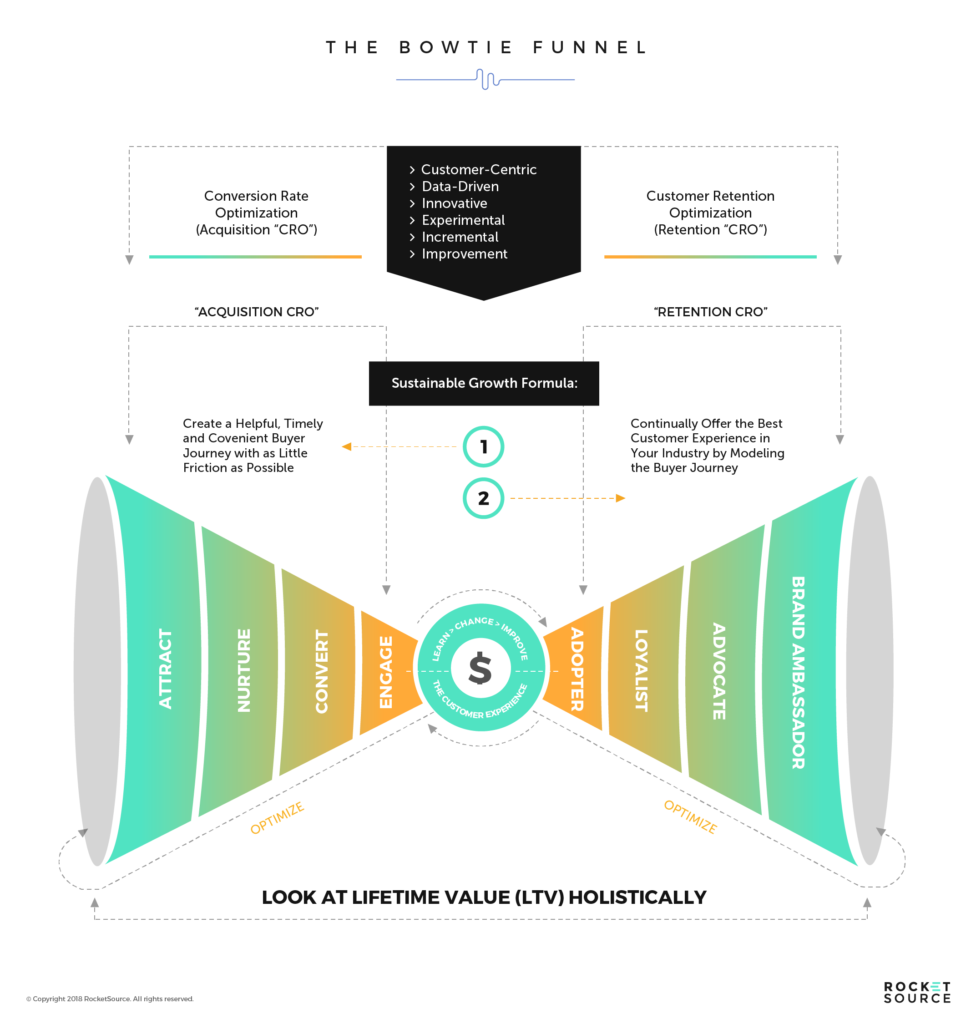
To showcase both conversion rates and customer retention rates we’ve taken a different spin on visualizing the marketing funnel. Here’s what it looks like today.


bow tie funnel


This is called the Bow Tie Funnel because of its shape. The left side gets a little more detailed than traditional marketing funnels, looking closer at the various stages of the buyer’s journey — attracting leads, nurturing potential buyers along their journey, converting prospects into customers, and then engaging buyers with brief follow up emails or direct mail thanking them for the purchase. Traditionally that’s when the customer’s journey ends in the eyes of a business, but reality shows that’s not the case.
On the right side of this modern marketing funnel, you’re able to see what the customer believes happens after the purchase and the potential for a deeper relationship. By optimizing their experience after the purchase, businesses increase retention rates and move customers from an adopter of the brand to a brand ambassador.
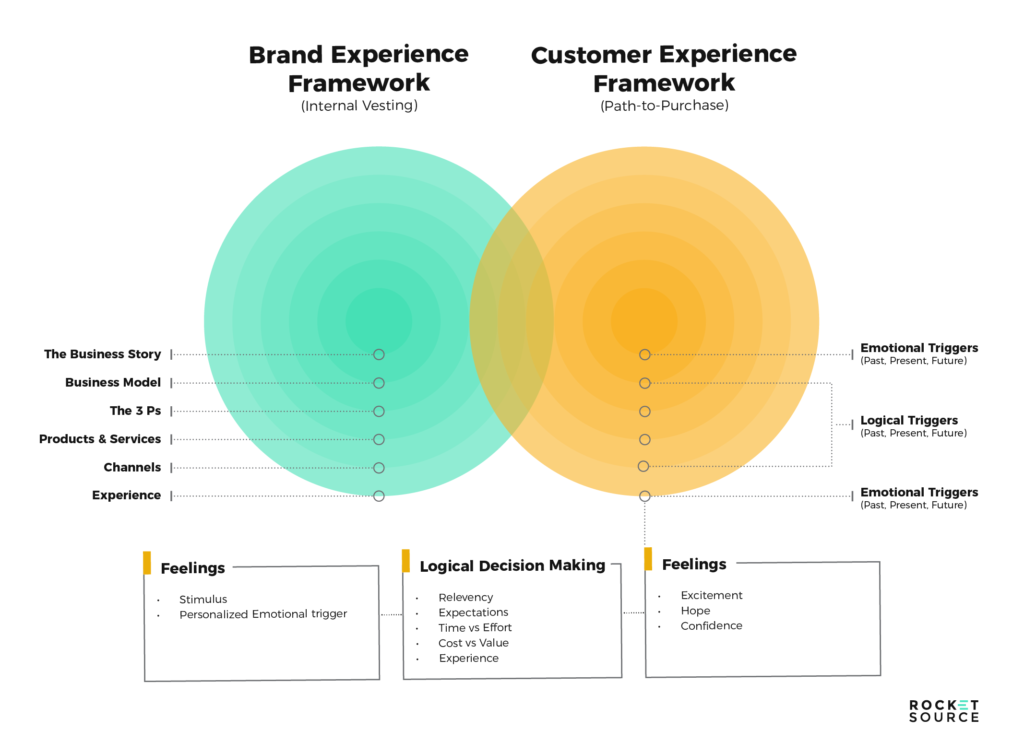
Understanding this full end-to-end journey, and how it loops back to the beginning to continually engage buyers, is critical when it comes to modern customer journey visualization. Equally critical is the lens in which you design these visual aids and communicate the journey across your organization.

The Importance of Having a Framework for Customer Journey Visualization


StoryVesting Methodology segment 1

storyvesting framework
traditional empathy map


Benjamin Shine- Sky Flow Sculpture 'Quietude'


"The Sky Flow sculpture takes the concept of the Flow series into new territory as a large scale, self-supporting form. Silhouetted against the ever-changing sky, the sculpture appears to change colour from pink to dark crimson, depending upon the strength and direction of the sunlight. The piece is constructed from a steel sub-structure and a large 80ft x 20ft custom made recycled HDPE net, shaped through a process of compressing and folding the material into form."

Sky Flow Sculpture
Quietude
Recycled HDPE and steel
2.5m x 1m x 5m